
CONTROL STRATEGIES FOR GRID-CONNECTED PV SYSTEM UTILIZING MPPT AND REACTIVE POWER CAPABILITY

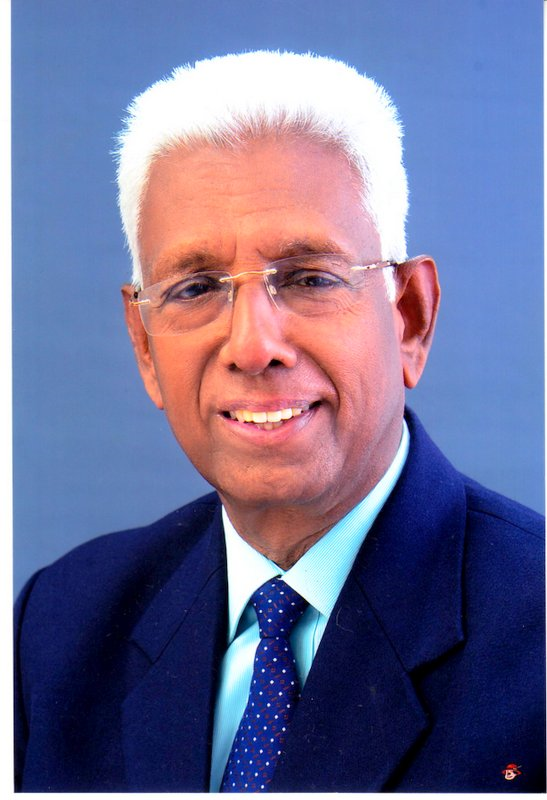
Sri Niwas Singh, Professor, Department of Electrical Engineering,
Indian Institute of Technology Kanpur, FIEEE

Due to increasing demand and environmental concerns, the PV power has become one of the fastest growing sources of electrical power generation and the emphasis is being given to the cost-effective utilization of this energy. The large scale, single-stage PV system is widely being considered for grid connection. For running the grid connected PV plant in a successful manner with effective performance, the proper operation and scheduling of PV power plants is required. Most of the PV array modelling are based on diode circuits and are not suitable for large PV systems. The conventional maximum power point tracking (MPPT) schemes discussed in the literature do not work properly in partial shaded conditions (PSCs).

PV Modelling
The classical model is suitable for small PV arrays. But when the size of the array increases, e.g. for large scale -grid integrated PV systems, the classical model is not suitable, because large number of electrical components will be required and thus, simulation time is substantially increased. Furthermore, for modeling the case of partial shaded condition, the flexibility for the change in parameter is limited. The results of the Piecewise Linearised Model (PWL), which is an improved diode circuit model, are compared with the mathematical model. The mathematical model gives very smooth PV curves as compared to another model. The shortcoming of the normal mathematical model is that after maximum power point, the PV voltage represented by the curve is less than the actual one. This problem is overcome by the modification in the mathematical equations of the PV module. The modified mathematical model gives almost accurate PV characteristics of PV array [1]. By utilizing the capacity of the DC-AC power converter of the grid connected PV system, the reactive power can also be fed to the grid along with the real power.

Also, the methodology to derive the P-Q capability curve has been developed so that by injecting P and Q powers, the grid-connected PV unit can be properly utilized as reactive power compensator. Such a curve describes all the possible values that can be assigned as reference for real and reactive powers, in order to make the control scheme effective. To validate the algorithm, the results of the approximate procedure have been compared with those provided by simulations performed with a detailed model of the PV system developed in the PSCAD/EMTDC environment, and a good agreement has been obtained. Furthermore, for PV system common operation, which is a system operating at maximum power point, the reactive power limit curve is also derived for changing environmental conditions i.e. for various irradiance and temperature. The P-Q capability of 375 kW PV array [1] is given in Figure 1. The dotted lines show the reactive power limits of the PV array at MPP. It is worth noting that the knowledge of the capability curve (giving P and Q limits) enables to perform classical load-flow studies on power systems with high penetration of large-size PV units in the same way as they are normally conducted in presence of standard synchronous machines.
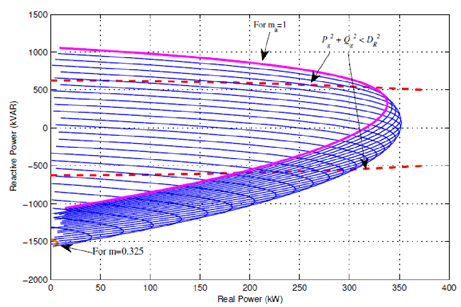
Figure 1: Full Capability curve of PV System (375 kW)

Control Strategies
The designing process of various control schemes such as PLL control, current control, DC-link voltage control and MPPT control schemes which cooperate with each other in intermingled manner, can be done considering the plant transfer function, gain and phase margin, bode plots, controllers’ proportional and integral parameters. For improving MPPT performance, a modified Incremental Conductance (INC) method with variable voltage perturbation size has been adopted. A DC-link voltage controller has been proposed based on Feedback Linearization (FBL) technique. The proposed voltage controller cancels out the effect of nonlinearity of the PV characteristics in the control process and thus, improves the dynamic performance of the controller. The voltage response of the controller shows the same dynamic behaviour at different operating points and is not disturbed when the atmospheric condition is changed. The reactive power injection has been done successfully by changing the reactive power reference of the current controller.
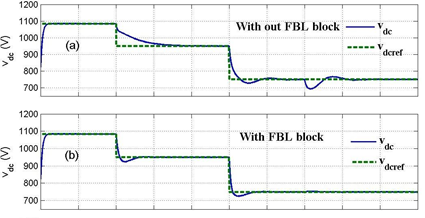
Figure 2. Response of controller with and without FBL

The performance of the DC-link voltage controller at different operating conditions is verified using simulation results. Since FBL block is used in the DC-link voltage controller, the nonlinearity present in the PV source is eliminated and the controller just acts like a normal linear controller at all operating conditions. The effectiveness of the proposed control system has been tested by simulating the system in PSCAD/EMTDC environment. By using the modified MPPT and proposed feed-back linearization (FBL) voltage control scheme, the performance of the system is much improved in terms of dynamic and steady state responses. Figure 2 shows the controller response with and without FBL.

Partial Shedding Conditions
A modified particle swarm optimization (PSO) algorithm, which is very effective, accurate and simple to implement, is developed to track the Maximum Power Point (MPP) of the PV system. Most of the PSO based MPPT discussed in the previous works are applied for two-stage PV systems or single-stage systems with DC-DC converters, where the duty ratios are considered to be the PSO particles. Here, for the single-stage utility scale grid-connected PV system, the PV voltages are selected as PSO agents and the voltage reference to the DC-link controller is decided by computational results of the PSO MPPT controller to track the MPP in all partial shaded conditions, where the conventional hill climbing, and incremental conductance methods fail. Various simulation results demonstrate that the proposed method reduces the tracking time, and the oscillations at MPP are almost zero. The proposed method is suitable in even those cases, where other methods based on classical algorithms used for partial shaded conditions do not work properly. From the test results, it is found that the proposed modified PSO method is more accurate and efficient compared to the existing methods. Moreover, the proposed method is simple and fast. The method has been developed for high-power utility scale systems under several irradiance patterns including complex PSCs. Due to its simplicity, it can be easily implemented in a low-cost controller and computational speed would be fast. Figure 3 shows the system performance to the voltage dip at 0.04 second.
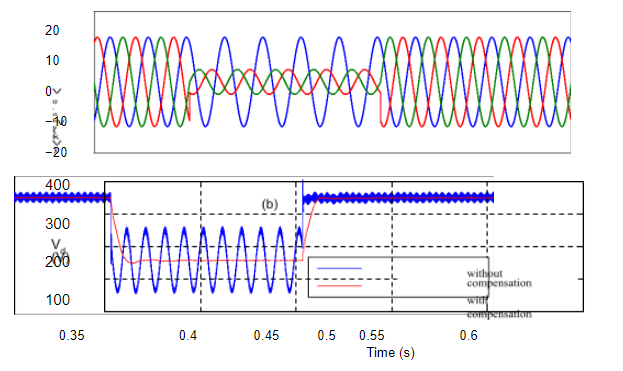
Figure 3. PV system response to voltage dip in grid

References

  1. VN Lal, and SN Singh, Modified PSO Based MPPT Controller for Single-Stage Utility-Scale PV System with Reactive Power Injection Capability, IET Renewable Power Generation,Vo. 10, No. 2, July 2016, pp. 899-907.
  2. SN Singh, Development of Control Strategies for Grid-connected PV System utilizing MPPT and Reactive Power Capability, CPRI Report 2020.

Biography
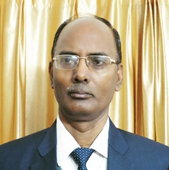
Prof S. N. Singh obtained his M. Tech. and Ph. D. in Electrical Engineering from Indian Institute of Technology Kanpur, in 1989 and 1995. Presently, he is Professor (HAG), Department of Electrical Engineering, Indian Institute of Technology Kanpur, India. He was Vice-Chancellor of Madan Mohan Malviya University of Technology Gorakhpur from April 2017 to July 2020. Dr. Singh received several awards including Young Engineer Award 2000 of Indian National Academy of Engineering (INAE), Khosla Research Award of IIT Roorkee, and Young Engineer Award of CBIP New Delhi (India), 1996. Prof Singh received the Humboldt Fellowship of Germany (2005, 2007) and Otto-monsted Fellowship of Denmark (2009-10).

Prof Singh became the first Asian to receive the 2013 IEEE Educational Activity Board Meritorious Achievement Award in Continuing Education. He is also recipient of INAE Outstanding Teacher Award 2016 and IEEE R10 region (Asia-Pacific) Outstanding Volunteer Award 2016. Dr Singh is appointed as IEEE Distinguished Lecturer of Power & Energy Society from 2019 and Industry Application Society for 2019-2021. He is also a recipient of NPSC 2020 Academic Excellence Award.

His research interests include power system restructuring, FACTS, power system optimization & control, security analysis, wind power, etc. Prof Singh has published more than 500 papers in international/national journals/conferences and supervised 31 PhD (12 PhD under progress). He has also written 23 book chapters, 6 edited books and 2 textbooks, one on Electric Power Generation, Transmission and Distribution and second is Basic Electrical Engineering, published by PHI, India. Prof Singh has completed three dozen technical projects in India and abroad. His two NPTEL (YouTube) video lectures on HVDC Transmission and Power System Operation & Control are extremely popular.

Prof Singh was Chairman, IEEE UP Section for 2013 & 2014, IEEE R10 (Asia-Pacific) Conference & Technical Seminar Coordinator 2015-18 and R10 Vice-Chair, Technical Activities (2019-2020). Presently Prof Singh is Immediate Past Chairman of IEEE, India Council. Dr Singh is Fellow of IEEE (USA), FIET (UK), FNAE, FIE(I), FIETE, AvH.

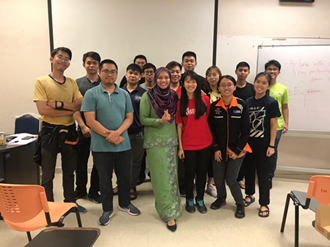
R10 COVID19 PERSONALITY OF THE MONTH – RAJAGIRI STUDENT BRANCH

MAKE A DIFFERENCE – AN INITIATIVE FOR STUDENTS IN NEED
P. Aiswarya, IAS SBC Treasurer for Rajagiri IEEE Student Branch
Diya Denny, Technical Coordinator for Rajagiri IEEE Student Branch

The Covid-19 pandemic has resulted in educational institutions all around the world being shut down in order to maintain social distancing and avoid the communal spread of Covid-19. Most institutions were able to shift to online education without any major issues and were able to continue to provide quality education to all students in the country. But the same cannot be said for a developing nation like India wherein many students rely on the government and public educational institutions. Most families could afford to provide a smartphone or a tablet for their children. Some families of students who attend government schools could not have this luxury. This meant that these students were no longer able to have access to education and their future was at stake. The government did take action by providing education over television networks, but some families whose children attended government schools didn’t have access to a television. This led to students coming together and learning in places where there was a television, which puts them at risk of being infected.

Volunteers at Rajagiri IEEE SB wanted to do something for these disadvantaged school children and the community. This led to the beginning of the make a difference campaign wherein the members of the Student Branch as well as all the members within the Section were informed about this initiative and asked to contribute any amount possible. This initiative saw overwhelming support from the members within the IEEE Rajagiri Student Branch as well as college students and their family and friends. This campaign was held for a week at the end of July 2020 and after a week of tireless campaigning, a total amount of Indian Rupees 100,000 was raised. Using this money, 12 mobile phones were procured to benefit 12 school students. An additional amount of Indian Rupees 1000 was also given along with the device so that they could take a mobile plan for the next six months. These 12 students were personally identified from different parts of Kerala (Thiruvalla – 5, Kottayam – 4, Thodupuzha – 1, Alappuzha – 2) on the basis of academic performance and recommendation from their school principal.

As IEEE members, we should always strive to pave the way for the advancement of humanity and work towards the betterment of our community. This was the motivating factor behind initiating this campaign. “Advancing Technology for Humanity” the slogan of IEEE is something that the IEEE Rajagiri SB volunteers took to heart and decided to act upon. The student community in the Kerala Section is a very strong and vocal community that has the power to affect real change in the society. And this initiative brought out the best from this community to affect a positive change in the lives of 12 school students. Check out the multimedia version of the COVID-19 Personality of the Month at the link https://newsletter.ieeer10.org/

R10 STUDENT BRANCH OF THE MONTH – IEEE UNIVERSITI TEKNIKAL MALAYSIA (UTEM)

Ting Chee Fung, Chair for IEEE UTeM Student Branch

IEEE Universiti Teknikal Malaysia Melaka (UTeM) Student Branch was formed in 2016. Since then, the Student Branch has organized a good variety of activities that revolves around the members’ engineering knowledge and skill development and networking opportunities. The SB has around 100 members all of whom strive hard to serve the best for its members and community.

IEEE UTeM SB strongly believes that IEEE is essential to the global technical community and technical professionals everywhere. The SB is widely recognized for the impact of its technology contributions for the community. IEEE is always engaged in an enterprise-wide strategic planning process. A summary of the long-range strategic plan, termed the IEEE Envisioned Future, details the main elements of the program of the SB.

As students are a vital component of the branch’s future, IEEE UTeM SB aims to connect students with the industry by creating a platform full of exciting events and activities. Students interested in the industry can get hands-on experience; develop knowledge and skills in terms of soft skills and technical skills.

2020 was a year full of challenges due to the COVID’19 pandemic. However, the UTeM IEEE SB continued to serve and perform its best. UTeM IEEE SB won several awards and accolades, and the summary is as shown below:

  • 2nd place in the IEEE Global Student Branch Website Contest 2020
  • 2nd place in the IEEE Region 10 Student Branch Website Contest 2020
  • IEEE Regional Exemplary Student Branch Award 2020
  • 9th place in Malaysia and the 1339th place in the world for IEEEXTREME 14.0 Programming Competition

R10 STUDENT BRANCH OF THE MONTH – IEEE PANIMALAR INSTITUTE OF TECHNOLOGY STUDENT BRANCH (PIT SB)

S. Anishka, Chair for IEEE PIT Student Branch

“The only impossible journey is the one you never begin” – Tony Robbins

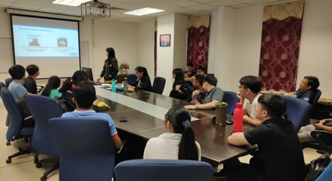
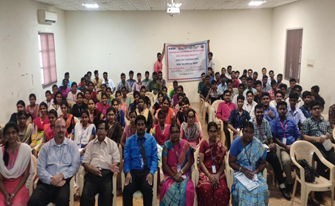
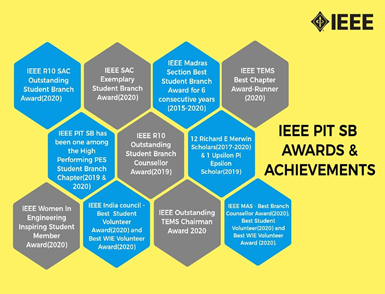
IEEE PIT SB was founded in the year 2013. It has 23 student chapters and 1 affinity group (IEEE Women in Engineering). Every year, the Student Branch maintains a membership retention level of 60% and more than 100 new students are added each year. IEEE PIT SB is one of the dynamic Student Branches in Madras Section and R10. The primary goal of the Student Branch is to inspire, enable, empower and energize its student members to enhance their technical interests by providing them a platform to showcase their skills. It provides a chance for individuals to exhibit their potential on various occasions and helps in the growth of their career. Even though the pandemic affected the SB, it did not fail to connect with students all over the globe.

The SB guided students by organizing several career enhancement talks such as general interview procedures, career and professional development, how to prepare for group discussions, gateway to software Industry, and many more which helps the students in placements and their interviews. IEEE PIT Student Branch has played host to more than 600 events which are not limited to guest lectures, seminars, workshops, faculty development programs, online contests, awareness programs, short term courses, and Webinars with a wide reach of more than 15,000 people across the globe. These events inculcate various emerging technologies among students, provides an opportunity to explore and volunteer, bridges the gap in finding mentors, improves leadership and networking skills, and support various humanitarian activities. The pillar of IEEE PIT SB is the Student Branch Counselor, Mr. Arun M., who constantly motivates the young minds in volunteering and shaping them to become a better version of themselves.

IEEE PIT SB has organized several events in collaboration with various organizations across the Sections. The SB’s social media team holds a special credit in publicizing and making the interested people utilize the opportunity by attending events. The most valuable treasure to IEEE PIT SB is its zestful volunteers who work tirelessly to enhance the Student Branch activities. The Student Branch volunteers enthusiastically take up roles in initiatives such as IEEE CS Compute, IEEE Day, IEEE PES DAY, IEEE CS SAC, IEEE MadC, IEEE YESIST12, IEEE Xtreme, IEEE Inspire India, and many more.

IEEE PIT SB conducts ice-breaking sessions every month and celebrates all special occasions to make people aware of its importance by organizing captivating events and keeping its members thrilled and engaged. Lots of promotional activities are organized for membership advancement such as yearly membership drives to keep students aware and to spread ideologies about the benefits of IEEE and IEEE Technical Societies, encouraging members to participate in IEEE regional conferences by providing scholarships to them, honoring active volunteers with medals and certificates, and organizing talks and workshops to help students to understand the beauty of science and engineering. IEEE PIT SB is one SB that is passionate about making a difference through IEEE.

R10 SUBSECTION OF THE MONTH – BHUTAN SUBSECTION

Kamal K. Chapagai, Chair for IEEE Bhutan Subsection

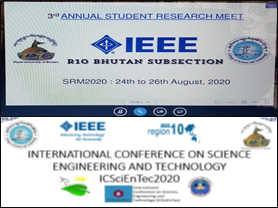
The IEEE Bhutan Subsection was founded in 2018 after institutionalizing the IEEE Student Branch in 2014 by Dr. Tshewang Lhendup, Assistant Professor for Electrical Engineering Department and Dean of Academic Affairs at College of Science and Technology, Royal University of Bhutan. The Subsection is the first of its kind in Bhutan and has a membership consisting of faculty from Electrical Engineering, ECE and Information Technology departments. The Subsection aims to provide a platform for faculty and students to be the professional members of IEEE Professional body; learn from other experts and contribute to the advancement of science and technology for community development.

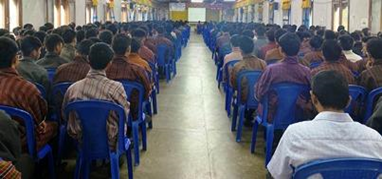
The main focus area of the Subsection is research capacity and professional development of faculty and students while promoting the College and University for building collaborative networks and internationalization through various research events and publications. To this end, the IEEE Subsection in collaboration with two research centers: The Center for Renewable and Sustainable Energy Development and the Center for Disaster Risk Reduction & Community Development Studies of the College organizes webinars and conferences for faculty and students to showcase their research findings and learn from researchers outside Bhutan. In its first three years, the subsection organized numerous talks and seminars with the highlight being organizing an international conference on the 5th and 6th February, 2021.

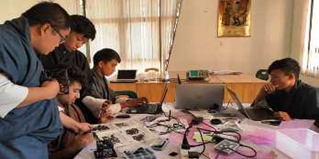
Under the student development series, a series of talks by industrial experts and other dignitaries are scheduled. Additionally, hands-on workshops and training were organized by IEEE volunteers and members in various areas including robotics, big data, and satellite development. This provides students to tackle real-world problems while enhancing their analytical and technical skills.

Some members of the IEEE Subsection have also collaborated with Bhutan standard Bureau to work out standardization of Bhutanese standards to IEEE. Under volunteer and community services, three members joined the core Technical Support Group as volunteers in March-April 2020 to provide technical assistance to the Southern Region National COVID-19 Task Force, Phuentsholing and developed the Web-based application software for collecting, storing, and generating decision making information about people evacuated for safety from the Indian Town at the Bhutan-India border during COVID-19 pandemic. Many other IEEE Subsection members provided volunteer services in conducting surveys and data entry.

Some of the recent accomplishment of the IEEE Bhutan subsection is:

  • Invited for IEEE SA and Bhutan Standard Bureau MOU meeting
  • Invited talk by Dr. Tshewang Lhendup in Sukatha Adhiveshn 2020 (SA2020).
  • Best presenter honorable award to Mr. Namgay Tenzin at SA2020

R10 SMALL SECTION OF THE MONTH – NORTHERN AUSTRALIA SECTION

M. Olsen, Chair for IEEE Northern Australia Section

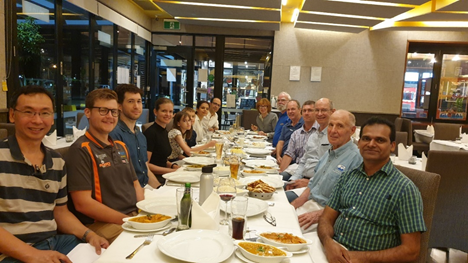
IEEE Northern Australia Executive Committee Annual General Meeting – December 2020

IEEE Northern Australia Section was established in 1994 and recently celebrated its 25th anniversary. IEEE Northern Australia covers distances of some 2,200 km East-West and 2,800 km North-South encompassing the Northern Territory, Papua New Guinea and the Northern areas of Queensland. Despite being a small section, Northern Australia has strong membership retention rates and focuses on delivering relevant content. IEEE Northern Australia’s headquarters is at Townsville, Queensland with a secondary base in Cairns. It also has a Northern Territory Subsection based in Darwin. IEEE Northern Australia has a strong Power and Energy Society Chapter and a joint Communications – Microwave Theory & Techniques Society Chapter. Given the Section’s proximity to the Great Barrier Reef, it also has an Oceanic Engineering Society representative in the Executive Committee. The Section has Young Professionals and Women in Engineering Affinity groups as well as a Student Branch extending across three University campuses. The Northern Australia Section also sponsors several university engineering awards for academic excellence each year. In 2020, Australia started the year with severe bushfires and A/Prof Mal Heron gave a Communications in Bushfire’s technical talk for the local community.

The Northern Australia Section then adapted to COVID-19 implications by switching to virtual activities and focusing on content generated within the region. The Section launched the IEEE Backyard Invention Series (IBIS – Australia’s iconic bin chicken) to showcase the ingenuity of its members who were predominantly constrained to their homes. Topics ranged from Green Turtle Nesting by Ron Goodwin to Dunny Drama’s and the 12V pump by Dr. Graham Woods, intertwined with technical presentations such as Planning your Home Solar System with a Battery by A/PROF Keith Kikkert and Space 2.0 – the Buccaneer Project by Natalie Stevens. Last year, the Section held its flagship Peter Arlett Lecture with David Leitch presenting on The Economic Consequences of Technology Change in Electricity for North Queensland. The Northern Australia Section collaborated with Engineers Australia to boost the Women in Engineering affinity group impact through cohosting an International Women’s Day Breakfast and technical panel. It also worked with the local primary school community to engage with students on engineering careers with robotics and electronics, and was judges for the regional primary school robotics lego competition.

IEEE Backyard Invention Series (IBIS – Australia’s Iconic Bin Chicken) and Regional Robotics Competition Judges

The Northern Australia Section is grateful to have the 2021 Membership Development Plan selected as one of IEEE’s top 10, and to receive the 2020 R10 award for best small section membership growth. In 2021, the Section hopes to build closer ties with Industry, Young Professionals and the student community to help the region overcome the challenges of distance and strengthen our electrical & electronics engineering community.

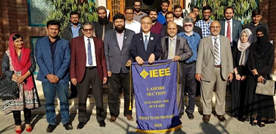
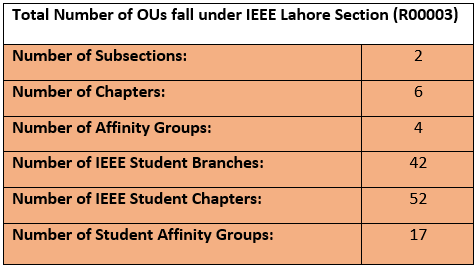
R10 MEDIUM SECTION OF THE MONTH – IEEE LAHORE SECTION

Sobia Baig, Vice-Chair for IEEE Lahore Section

IEEE Lahore Section was established as the Pakistan Section in 1968. In 1998, the Pakistan Section was renamed as the Lahore Section. IEEE Lahore Section is engaged in Advancing Technology for Humanity through its multifarious professional and student activities. In 2018, IEEE Lahore Section celebrated its 50-year Anniversary with the participation of R10 Director 2018 Prof. Dr. Kukjin Chun.

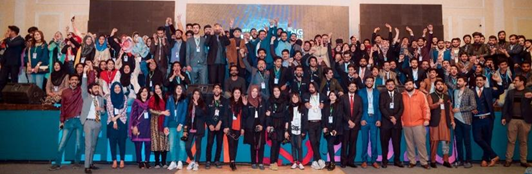
The 1st IEEE YP Leadership Conference in R10 was organized by the Young Professional Affinity Group in February, 2020 with the collaboration of IEEE Lahore Section and all IEEE Lahore Section Technical Chapters. It was inaugurated by Dr. Susan Kathy Land, President of IEEE. More than 2400 participants from all over Pakistan joined the conference with five different tracks.

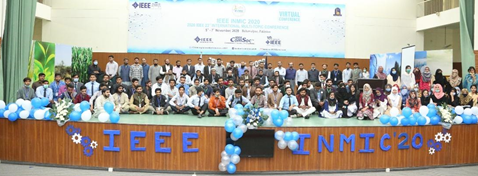
INMIC is the flagship annual conference of IEEE in Pakistan. IEEE Bahawalpur Subsection under IEEE Lahore Section organized the 23rd INMIC in 2020, in Islamia University of Bahawalpur. To engage volunteers and disseminate knowledge and skills, IEEE Lahore Section organized more than 25 Webinars during the COVID-19 pandemic. A significant impact of the two Webinar Series is observed, as collectively more than 7000 people joined the webinars and there was on average 68.7% attendance.

The IEEE Lahore Section has won several awards and accolades. Some of the recent achievements include:

  • 2020: IEEE Darrel Chong Student Activity Award – 2020 for All Pakistan Electrical Symposium at University of Engineering and Tech – Lahore and 11th IEEE Annual Engineering Project Exhibition at UCET – The Islamia University of Bahawalpur.
  • 2020: Dr. Asjad Amin – IEEE Outstanding Branch Counselor and Branch Chapter Advisor.
  • 2019: Muhammad Hamza Ihtisham – IEEE VoLT Graduate.
  • 2018: Outstanding Section Membership Recruitment and Retention Performance Award.

Annual General Meeting 2019 of the IEEE Lahore Section was held in February 2020.

R10 LARGE SECTION OF THE MONTH – SEOUL SECTION

Jae-Hyun Kim, CheonWon Choi, Heewon Seo, JeongYeon Shim,
Hongil Yoon, and Seokhyun Yoon, IEEE Seoul Section

IEEE Seoul Section was established in 1976. Since then, the membership of the Seoul Section has increased gradually. Presently, the Seoul Section is working as a large section of Region 10, supporting 26 chapters and 18 student branches. For the last 25 years, the Seoul Section has not only built a large membership base but also hosted a large number of educational and technical activities. No doubt, such an enhancement of the Seoul Section was enabled by the efforts – made by the Seoul Section consistently – to well educate students, to host conference and technical workshops beneficial to members, to patiently coordinate chapter and student branches, and not to forget recognizing invaluable members.

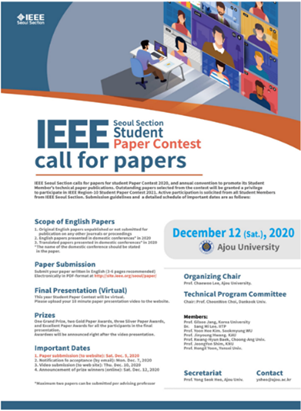
Initially, the Seoul Section made good efforts to educate students. One such effort was to hold IEEE Seoul Section Student Paper Contest annually. Last year, the Student Paper Contest was held on 12 December, 2020, wherein 34 high-quality papers were presented in the three sessions in a virtual form. It was a meaningful contest to recognize students who have steadily demonstrated advanced research in the difficult situation of COVID 19. After a rigorous review process, one Grand Prize, two Gold Prizes and three Silver Prizes were awarded to winners. The Student Paper Contest in 2020 is noteworthy that the research results were not only original and high impact. The Student Paper Contest is providing a great opportunity and stimulus to preliminary engineering researchers by presenting guidelines for future dreams and technologies that can contribute to humankind.

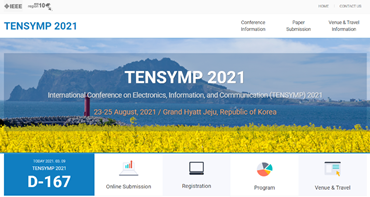
Secondly, the Seoul Section has made efforts to host conferences and workshops beneficial to its members. It is notable that the Seoul Section hosted IEEE Region 10 Conference (TENCON) in 2018 and will hold IEEE Region 10 Symposium (TENSYMP) this year. With the experience of TENCON 2018, the Seoul Section is hosting TENSYMP 2021 (www.tensymp2021.org) this year. It will be held at Grand Hyatt Jeju, Republic of Korea, from 23rd to 25th August, 2021. This is a prestigious flagship technical conference of IEEE Region 10. The theme of TENSYMP 2021 is “Good Technologies for Creating the Future” and its aim is to bring together researchers and engineers from academia and industry to overcome the present difficulties and create a prosperous future. There will be best paper awards and student travel grants. All accepted and presented papers will be submitted to IEEE Xplore digital library.

Thirdly, the Seoul Section has made efforts to patiently coordinate chapters and student branches. Such efforts resulted in the vitalization of chapters and student branches. This year, IEEE Vehicular Technology Society (VTS) Seoul chapter held the “Mobile Communication Technology Workshop” from 23rd to 24th February, 2021 in Seoul. This workshop, which was conducted in both online and offline formats due to COVID 19, focused on contemporary topics; vertical 5G services and 6G technologies. 160 participants joined in this event and discussed the communications technologies for realizing the theme “Beyond 5G and Toward 6G”. It was also notable that most of the participants were the VTS Seoul chapter and the Seoul Section members. The graduate and undergraduate student membership of the student branches in the Seoul Section number over 200. They are supervised by 19 volunteering faculty. Most activities focus to serve as the lively intramural networking of students and faculties with major emphasis in the provision of mentoring on academic/research/career activities and plans. Many academic events serve to challenge the students’ research endeavors. Many other activities in the form of formal seminar meetings or informal get-together meetings are hosted in local bases.

Fourthly, the Seoul Section has made efforts not to forget recognizing invaluable members. As ways of recognizing members, the Seoul Section endeavors to elevate the grade of an eligible member, strives to explore a well-deserved member for IEEE awards and discovers a potential member to voluntarily work for IEEE.

R10 LIFE MEMBER PERSONALITY OF THE MONTH –V K DAMODARAN

Kerala Section

Prof. V.K. Damodaran joined the league of more than 400,000 members of the prestigious professional society of electrical and electronics engineers viz., IEEE in 1981. He became a Senior Member in 1990 and Life Senior Member in 2012. Since the transition of Kerala to a Section from a sub-section under Bangalore section in 1984, Damodaran was associated with expanding the member strength and reach of IEEE in Kerala, as well as to the rest of India, through his multifarious professional activities and his official work of science and technology promotion.

Working as Newsletter editor of Kerala Section; as organizer of many conferences; as technical editor and author of engineering books in the local language and English; as IEEE Section executive, and as Head of the State Science and Technology administration set-up, Damodaran (endearingly called by colleagues as VKD), was the natural choice for being elected as the Chair of Kerala Section in 1991. As the India Council Newsletter Editor thereafter for 10 years in two spells; as the Executive Vice-Chair of IEEE India Council in 2001; as General Chair of ISGT Asia (Smart Grid) conference in 2011; as R10 Life Member Committee Chair in 2016; as MGA level Member of Life Member Committee in 2017 & 2018; as Member of sub-committees of IEEE EAB related to Engineering Projects in Community Services, Humanitarian Activities, Accreditation, Editing, Chair of Asia Teacher in Service, and the like; as Advisor or General/Technical Chair of several other international conferences organized by Kerala Section, and currently as the General Pacific Power and Energy Engineering Conference 2021, VKD has been a mentor, leader, or doer in spreading the message of IEEE in the Section, in India Council, in Region 10, and also globally.

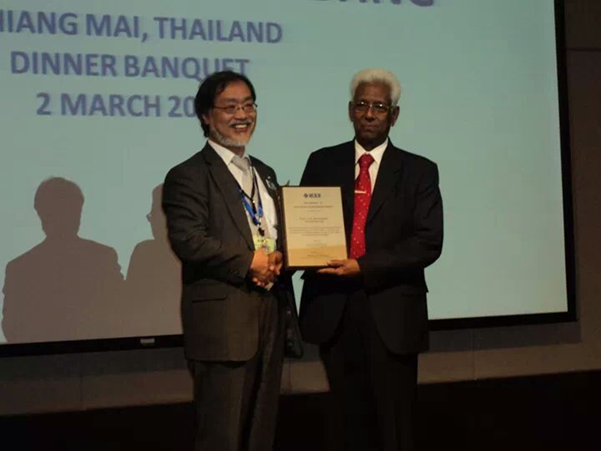
Receiving 2012 R10 Historic Achievement Award for Renewable Energy Application, from Toshio Fukuda, then R10 Director & now Past President of IEEE at Chiang Mai, Thailand.

VKD has a unique style of turning his career into a hobby and hobby into a career; working with the people and working as a statutory officer; conducting research on the people and with the people as well as for the people; rising in protest as a consumer activist, protector of environment and nature; science popularizing; author & public speaker; broadcaster & community educator; quasi-judicial officer; director of several technical departments; international consultant (mainly for UN) on energy and environment, and even as Secretary to Government of Kerala. He has travelled to and worked in over 50 countries; taught at College of Engineering, Guindy (now Anna University) & CREC (now NIT Calicut) and served as Assistant Director & Head of Technical Sciences at State Institute of Languages Kerala, and as Regional Electrical Inspector to Govt. He has served as Founder Director of S&T and Environment and Energy Management Centre-Kerala as well as Founder Controller of Rajiv Gandhi Centre for Biotechnology; Managing Director of International Network on Small Hydro Power, Hangzhou, China and the supervisor of implementation of UNIDO Regional Centre on SHP (for Africa) in Abuja, Nigeria, and the like. In official positions and in IEEE, VKD is noted for his outreach and for creating an IEEE image of ethical engineering.

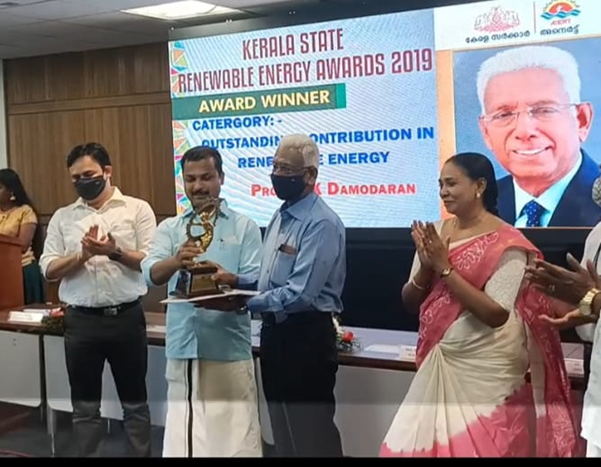
Receiving Kerala State Award for Life Time Achievement in Renewable Energy and greeted by the State Chief Minister Shri. Pinarayi Vijayan on 22 Feb 2021 at Trivandrum, India.

Public Awards that came in recognition of his work of 58 years, the latest being The Kerala State Renewable Energy Award 2019 (Lifetime Achievement Award for RE promotion in the State), Lifetime Achievement Award by Kerala Consumer Guidance Society, Lifetime Achievement (Section Chair) Award by IEEE India Council (2020), The TMA Gold Medal and Management Leadership Award 1999, Third Millennium Medal from IEEE President (2000), Outstanding Volunteer Award by India Council (2000), Historic Achievement Award for Application of Hybrid RE to remote rural areas in Africa by IEEE R10 (2012), IEEE EAB Award for design of outstanding teacher training module for early career faculty (2014), IEEE R10 Outstanding Contribution to Continuing Engineering Education Award (2014), Kerala State Award for Protection of Silent Valley Rainforests (2010), Energy Conservation Award by Energy Conservation Society (1996), and several others by Kerala Section over the years.

Currently, VKD is Chair of Kerala Section Consultants Network, and also the Chair of Kerala Section Grievance Redressal Committee. He is guiding the following institutions in an honorary capacity for the past decade or more:

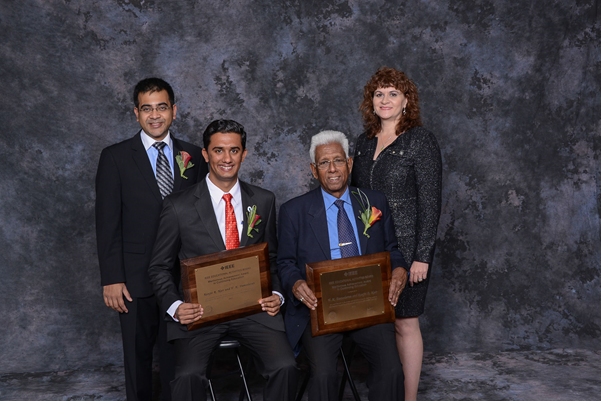
With Co-awardee Ranjit R Nair, EAB Chair & Vice President of IEEE Dr. Sourabh Sinha and Ms. Karen Panetta, President IEEE-HKN at 2014 IEEE EAB award ceremony at New Jersey, USA
  • Chairman, Centre for Environment and Development
  • Chairman, Foundation for Advanced Clean Energy Studies
  • Chairman, Chakshumathi Assistive Technology Centre for the Blind
  • Chairman, Nature’s Green Guardians Foundation
  • President, Vakkom Moulavi Foundation Trust
  • Director and Mentor (R&D and Training) Team Sustain Ltd., Kochi [Solar & Waste to Energy]
  • Director General, Experience Foundation
  • Director General, International Non- Governmental Cooperation Organization for Renewable Energy (INGCORE)
  • Member of Kerala State Council for (and EC) Science, Technology and Environment
  • Board (and EC) of EMC-Kerala
  • Trainer & Chair of judging committees on innovations by school students and the youth nationally.

The vast knowledge fund and network of IEEE globally, nationally, regionally, and locally in Kerala, are the confidence giving elements for all these “wanted, can’t wait activities” in these present times.

R10 STUDENT PERSONALITY OF THE MONTH – SAI DIVYA NALLAPANENI

Hyderabad Section

“Growth and Comfort will not come together!” – A quote that always motivates and makes to drive forward despite many hindrances.

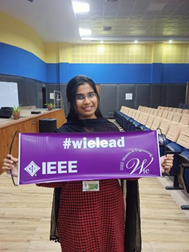
Ms. Sai Divya Nallapaneni is an undergraduate final year student pursuing her bachelor’s degree in Electronics and Communication Engineering as major and Computer Science as a minor at G. Pulla Reddy Engineering College, Kurnool, Andhra Pradesh, India. She has been an IEEE member since 2017 and has been contributing to various events at the Student Branch, Section and Regional levels as a pro-active volunteer. Currently, she is serving as the Scholarships Outreach Initiative Lead at IEEE CS SYP, Regional Student Ambassador at IEEE Computer Society, Zonal Student Representative of IEEE Ananthapur Sub-section, and Chairperson at IEEE CS GPREC SB. Previously, she has served as the Section Lead at IEEE Xtreme 14.0, Section Ambassador at IEEE PES Day 2020, IEEE Brand Ambassador, IEEE PES Day 2019 Ambassador and IEEE Xtreme 13.0 Ambassador.

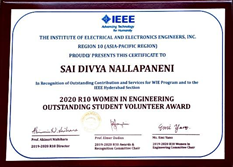
Acknowledging her works related to the tech community, and her vision in uplifting women, she received the IEEE R10 WIE Outstanding Student Volunteer Award for the year 2020. She was also awarded IEEE CS Richard E Merwin Scholar 2019 for her exemplary contributions to IEEE Computer Society at Student Branch and Section Levels. Being meritorious in studies, she has been granted with Grace Hopper Celebration India Scholarship for the year 2019 and also been awarded with the Best Girl Student of the GPREC award for the academic year 2019-2020. She has also been one of the Finalists for Shri Pralhad P Chhabria Award 2021 given by H.O.P.E Foundation in association with IEEE India Council and IEEE WIE AG – Pune Section.

Divya says that she started her quest to learn and explore new things from the first year of her undergraduate studies that made her be part of many organizations and NGOs like IEEE, ISTE, IE (India), Aasya Foundation and She Empowers. She is a promising individual who always loves to create an impact with her unique approach in dealing with things. Talking about her IEEE journey and involvement, she has been an IEEE member since 2018. She mentions that she was inspired and motivated by her senior, Mr. Ajay Kumar Machani (PES Day Chair 2020).

With the support and encouragement from her student branch, she started her journey as a delegate to the college events and in time she started volunteering and served in various roles for major events like All Hyderabad Power and Energy Student Congress 2018, All India Computer Society Student and Young Professional Congress 2019, All Hyderabad Computer Society Student Congress 2020 and All Hyderabad Women in Engineering Student Congress 2020. Her zeal to encourage, energize and empower Women made her to work for IEEE Women in Engineering AG, where she led many initiatives at college level, specifically mentoring educated school children from underprivileged schools regarding their careers in STEM fields. She adds, “Nothing comes in our way until we start grabbing up”. She has attended many conferences and met many people whose actions continuously invigorated her thoughts and made her part of this learning journey despite many hurdles at the start. Her enthusiasm in traversing about opportunities made her learn new things and became part of them.

To the young dynamic leaders, who are reading this, her suggestion is to start grabbing whatever comes on one’s way, because one can learn something out of every experience and believe that success beckons only the ones who accept the challenges and move forward despite struggles.